CEHAT is running a 24*7 helpline to respond to women and girls facing violence .Please call this number 9029073154 for support and assistance.
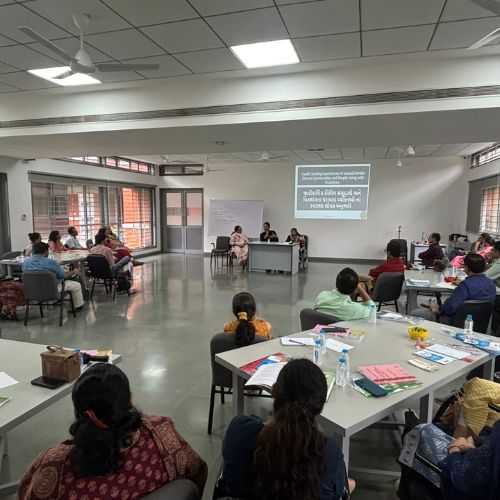
The collaboration, formalized through a Memorandum of Understanding (MoU), aiming to embed gender perspectives into the MBBS curriculum and promote gender-sensitive healthcare practices. As the first step toward this goal, a three-day Training of Trainers (ToT) Workshop was held at PSMC from June 24–26, 2025, with participation from 37 faculty members representing pre-clinical, para-clinical, and clinical disciplines.
Day 1 of the workshop began with an overview of the GME initiative and its relevance to medical education. In the opening session, Renu Khanna facilitated an engaging discussion on “Does Gender Matter in Health?” where participants explored key concepts such as the difference between sex and gender, and how gender norms, roles, and stereotypes shape health outcomes and access to care. Activities like the Flashcard and Faces exercises encouraged participants to reflect on how gender operates as a social system in healthcare.
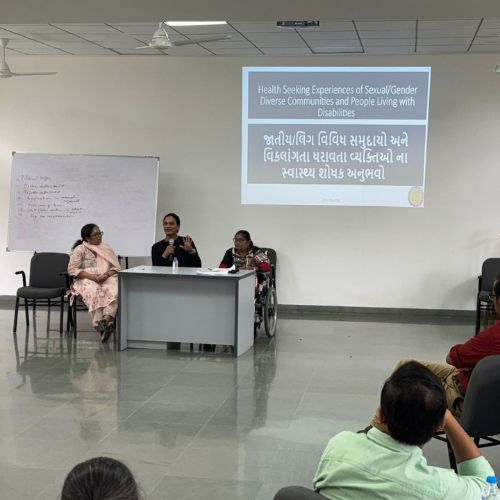
It was followed by a panel discussion on the health-seeking experiences of sexual and gender-diverse communities and persons with disabilities, facilitated by Kartika Gore and Nita Panchal. The session highlighted the systemic barriers these groups face including stigma, discrimination, and exclusion and underscored the importance of inclusive, rights-based approaches to care.
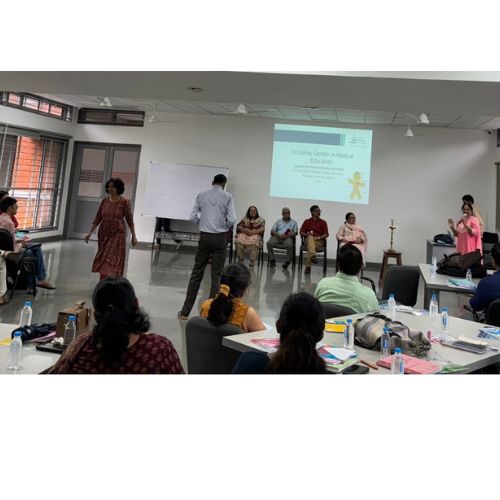
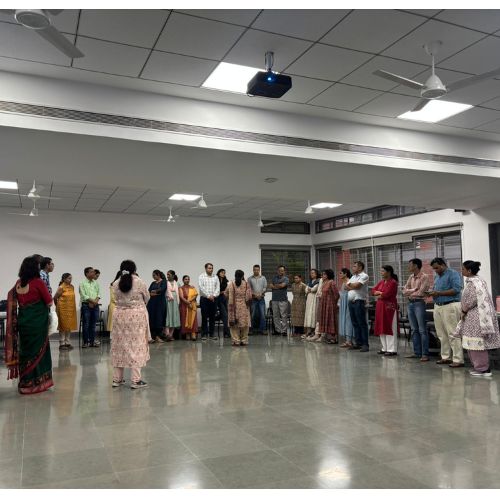
Afternoon session was led by Renu Khanna, that began with a Power Walk activity to illustrate intersectionality and how overlapping social identities influence access to healthcare. This was followed by a presentation on gender as a social determinant of health, and an exercise using the WHO Gender Analysis Matrix, which helped participants systematically analyse how gender, in conjunction with other social factors, impacts health risks, service access, and outcomes.
Day 2 opened with Dr. Harshal Sathe addressing the barriers to healthcare faced by individuals with Psychosocial disabilities. This was followed by a session on Gender-Based Violence (GBV), beginning with the Blanketed by Blame activity facilitated by Amruta Bavadekar, which brought out the stigma, disbelief, and institutional failures survivors often face. Dr. Sathe then led a discussion on the forms and health consequences of GBV, the legal duties of healthcare providers, and introduced the LIVES approach for first-line support.
In the next session, Amruta Bavadekar and Renu Khanna facilitated a discussion on Abortion as a gender issue, using real-life case studies to examine the multiple barriers women face in accessing abortion services—ranging from provider bias and documentation challenges to mandatory reporting under the POCSO Act.
Sessions on day 2 were concluded with Ethics in medical practice, facilitated by Dr. Dineshkumar. Through real case scenarios, participants discussed ethical dilemmas related to medical error, informed consent, confidentiality, and provider responsibilities in sensitive situations such as adolescent care and HIV disclosure.
Day 3 focused on putting the learning into practice through curriculum design. With support from mentors Dr. Praveen Singh, Dr. Manisha, Dr. Suman, and Dr. Dinesh, participants worked in small groups to develop gender-integrated lesson plans based on their disciplines. Using a structured format, they mapped CBME competencies and planned how to meaningfully include gender perspectives in their teaching.
In the afternoon, each group presented its lesson plan, demonstrating practical approaches to embedding gender into medical education. The workshop concluded with a reflection and feedback session, followed by a valedictory ceremony. Participants appreciated the hands-on approach and the opportunity to collaboratively rethink their teaching practice.

CEHAT is running a 24*7 helpline to respond to women and girls facing violence .Please call this number 9029073154 for support and assistance.